

As the days grow shorter and temperatures drop, many people notice changes in their mood, energy, and motivation. Seasonal Affective Disorder (SAD) Month offers an important opportunity to talk openly about how seasonal shifts can impact mental health—and to remind ourselves that we are not alone in these experiences.
Seasonal Affective Disorder (SAD) is a form of depression linked to changes in daylight and disruptions to our circadian rhythm. While anyone can experience SAD, the effects can be especially noticeable during late fall and winter, when reduced sunlight and colder weather can make even everyday tasks feel heavier.
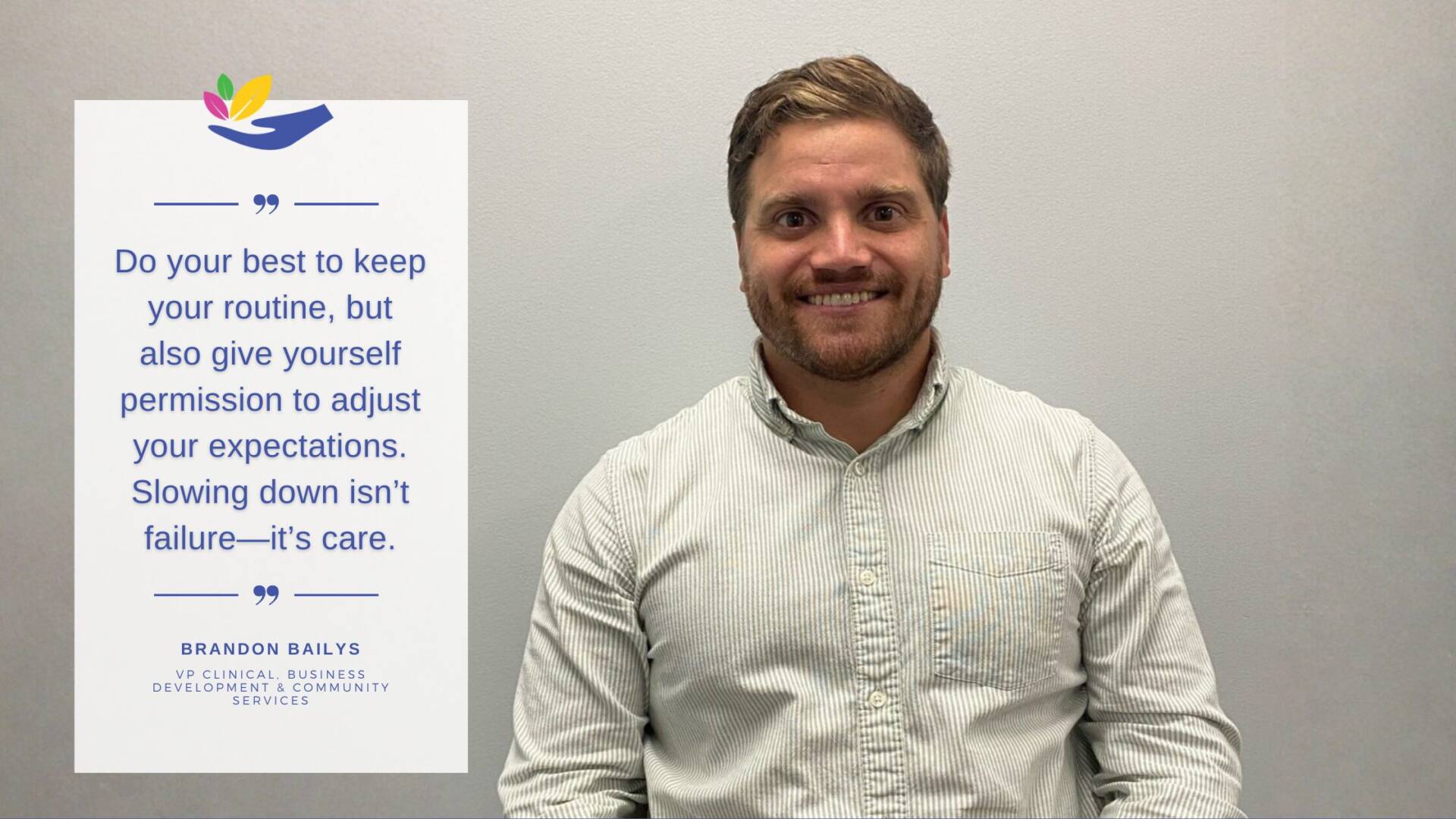
At Thrive, we believe awareness begins with honesty. As Brandon Bailys, VP of Clinical and Community Services, shares:
“As the seasons change, the days grow darker and colder, and it’s natural for our mood and energy to shift. This time of year is an important reminder to check in with ourselves—and with the people around us. I live with depression year-round, but for those who don’t, the combination of less light and colder weather can feel especially unsettling. Motivation drops, energy fades, and even simple tasks feel heavier. It’s okay to acknowledge that.”
Brandon emphasizes the importance of self-compassion during this season—maintaining routines when possible, while also allowing space to adjust expectations. Slowing down, he reminds us, is not a failure; it is an act of care. For those working in mental health, recovery, and peer support, SAD can carry additional weight. Muneera Novak, Assistant Clinical Director, highlights how seasonal depression can affect helpers just as deeply as those they serve:
“Our work invites us to stand beside people navigating grief, trauma, addiction, depression, and uncertainty. It requires emotional presence, compassion, and patience. When SAD shows up in our own lives, it can heighten fatigue, reduce emotional capacity, and make our roles feel heavier than usual.”
In helping professions, there can be pressure to “push through” or remain strong for others. But, as Muneera points out, acknowledging our own mental health needs is not a weakness—it is essential for sustainable, ethical care.
“Tending to ourselves allows us to show up more grounded, authentic, and present for the people we serve. That might look like using light therapy or vitamin D as recommended by a professional, carving out rest, reaching out for supervision, continuing therapy, or simply naming what we’re experiencing instead of hiding it.”
For peer supporters, this may mean leaning into the core values of peer work: connection, honesty, and shared humanity. For clinicians, it may mean modeling the same self-compassion we encourage in others. Across all roles, it means recognizing that resilience does not mean being untouched by struggle—it means allowing ourselves care, support, and community when we need it.
As SAD Month reminds us, mental health challenges do not disappear during the winter—they often become quieter, heavier, and easier to overlook. This season is an invitation to check in, reach out, and care for ourselves and one another with intention.

“The work we do matters deeply,” Muneera shares. “So do we.”
Ready to connect with your Peer Recovery Supporter?
Refer yourself today!
This blog post was developed with the use of a language model developed by OpenAI and edited for accuracy by Thrive staff.